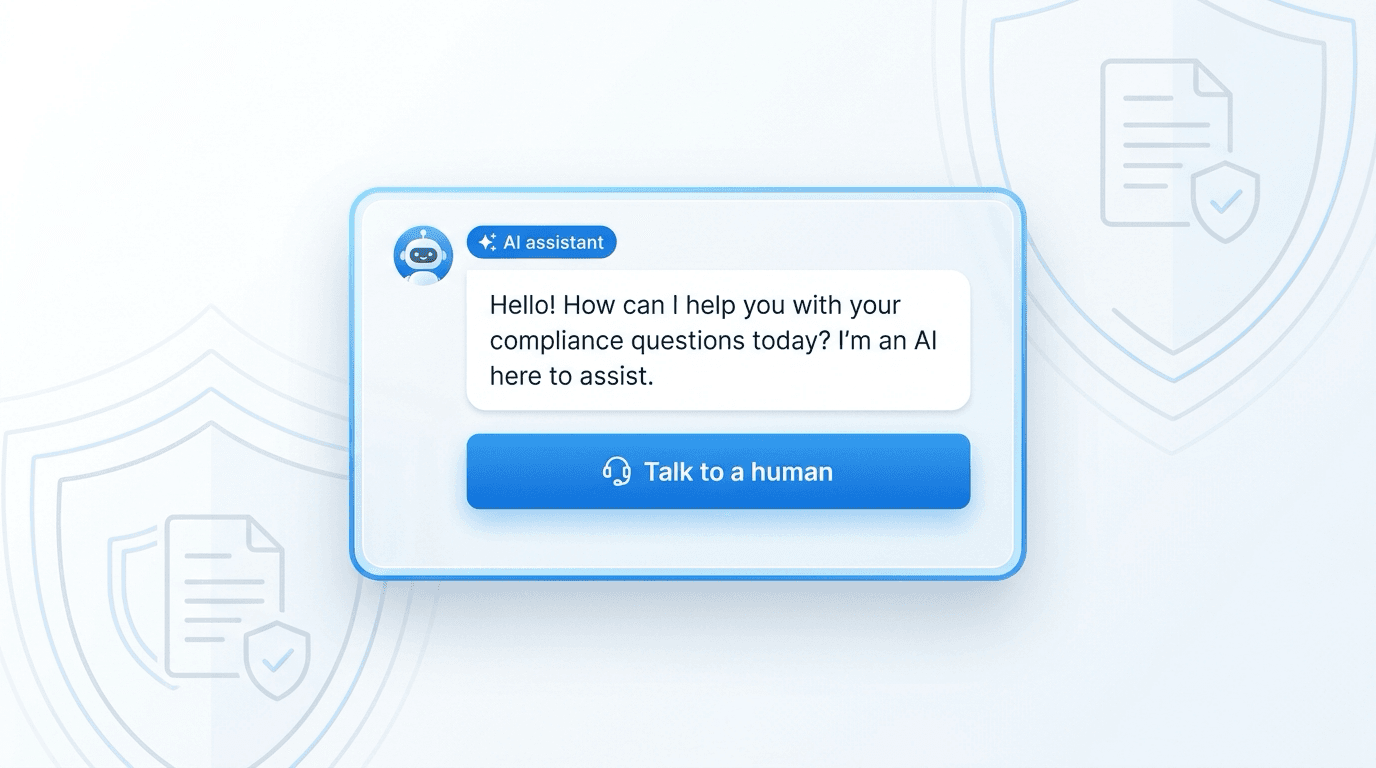
For years, the worst customer-service experience has had a name among the people who endure it: the “doom loop” — trapped in an automated system, repeating yourself to a bot that cannot help and will not let you reach a person. Regulators have now noticed, and in 2026 the rules started to catch up. If your business uses an AI chatbot for support, the era of “deploy a bot and hope” is ending. The new expectation is simple and reasonable: be honest that it's AI, and always let people out to a human.
This guide walks through what changed in New York City and California, the three compliance must-haves that nearly every emerging rule shares, and exactly how to implement a compliant AI-to-human handoff — without a legal team or a custom engineering project. (One note up front: this is general information, not legal advice. New rules change fast; confirm the specifics for your jurisdiction with counsel.)
TL;DR
- NYC advanced a proposed “doom-loop” rule: disclose that a customer is talking to AI and provide a one-step path to a human, with penalties for violations.
- California's AB 1609, as reported, would require larger companies to reach a human within a short window when a customer asks.
- Three must-haves run through all of it: disclose it's AI, offer a one-step human handoff, and never trap users in a loop.
- A more accurate bot means fewer forced handoffs — grounding your bot is part of the compliance story.
- BuiltABot includes AI disclosure and human handoff by default. Start free — plans from $29.99/month.
What Changed: New York City & California
Two developments in 2026 signaled where customer-service AI regulation is heading in the United States.
New York City's “doom-loop” rule. NYC advanced a proposed consumer-protection rule aimed squarely at support chatbots that trap customers. As reported in the press, it would require businesses to disclose when a customer is interacting with AI and to provide a clear, one-step route to a human agent — the kind of “type agent” or “press 0” escape hatch that should always have existed — backed by monetary penalties, with a public hearing as part of the rulemaking. Because it is still a developing rule, the final text, thresholds, effective date, and penalty amounts can shift; treat the coverage as directional.
California's AB 1609. California, which already has a bot-disclosure law on the books, moved further with legislation covering AI in customer service. As reported, AB 1609 would require larger companies — described in terms of revenue thresholds — to connect a customer to a human within a short, defined window, measured in minutes, when the customer requests one. Again, the exact scope and timeline are what matter legally and can be amended.
The pattern is the thing to notice. Two very different jurisdictions landed on the same two ideas: honesty about AI, and a fast, reliable door to a person. That is almost certainly the shape of what spreads next — which means building it now is both compliant and future-proof.
The 3 Compliance Must-Haves
Strip the legalese away and every rule we have seen reduces to three requirements. Build these and you satisfy the spirit of the current wave regardless of which jurisdiction you operate in.
- Disclose that it's AI. Tell customers, up front and plainly, that they are chatting with an AI assistant. One short line when the conversation opens does it — and it builds trust rather than eroding it, because people resent feeling deceived far more than they mind a clearly labeled bot.
- Offer a one-step human handoff. A human must be reachable in a single, obvious step at any point — a “talk to a human” command, a visible button, or an explicit request the bot recognizes and honors immediately. No menus-within-menus, no “please rephrase” stonewalling.
- Don't trap users in a loop. If the bot cannot help, it must escalate — not endlessly re-ask the same question. The doom loop is precisely the behavior these rules exist to kill, so design your bot to recognize when it is stuck and route out.
Add compliant AI + human handoff in minutes
BuiltABot discloses it's an AI assistant and lets customers reach a human in one step — queue during business hours, captured message after. Compliance-friendly by default, no custom build. Free for 14 days.
How to Implement Compliant Handoff
Compliance here is mostly configuration, not code. Here is the practical build:
- Define escalation triggers. Hand off on an explicit request (“talk to a human”), on low confidence, and on sensitive topics you flag. Our guide to when to hand off to a human breaks down the exact triggers to set.
- Make “talk to a human” always available. Surface it as a standing option, not something a customer has to discover. The bot should recognize the request in plain language and act on it immediately.
- Set a business-hours fallback. During hours, route to a live-agent queue. Outside hours, capture the message and a callback so the request is never dropped — and the customer is told what happens next.
- Log the handoff. Keep a record that disclosure was shown and the handoff occurred. If a rule ever asks you to demonstrate compliance, a log turns “we think so” into evidence.
This is the same hybrid model good support teams already want — see our human-handoff and hybrid support guide and the broader future of AI-plus-human customer service. Compliance just makes the escape hatch non-negotiable.
Accuracy Is Compliance Insurance
Here is the part most compliance checklists miss: the best way to avoid handoff problems is to need fewer handoffs. A bot that resolves questions correctly does not frustrate customers into demanding a human in the first place — so grounding your bot in your real content is not a separate project from compliance, it is the quiet half of it.
When a bot is grounded in your knowledge base and honest about its limits, two good things happen at once: routine questions get resolved without a person, and the genuine edge cases escalate cleanly instead of spiraling into a loop. That is exactly the behavior the new rules reward. An accurate bot plus a reliable handoff is the whole compliance posture in one sentence. If you're weighing tools, our chatbot vs. live chat vs. help desk comparison shows where each fits.
How BuiltABot Handles Disclosure & Handoff
BuiltABot was built for the hybrid model these rules now expect, so the compliance-friendly behavior is the default rather than a feature you have to assemble:
- AI disclosure — present a clear “you're chatting with our AI assistant” message so customers always know.
- One-step human handoff — customers reach a person in a single step; the bot recognizes the request and routes it to your live queue.
- Business-hours and after-hours rules — live routing when you're open, captured messages and callbacks when you're not, so nothing is dropped.
- Grounded answers — replies come from your real content, which keeps resolution high and forced handoffs low.
You get a support assistant that is honest, never traps anyone, and hands off like a professional — the behavior customers want and regulators are now writing into the rules. Setup is no-code and takes an afternoon.
Frequently Asked Questions
Is it legal to use an AI chatbot for customer service?
Yes. Using an AI chatbot for customer service is legal in the United States, and millions of businesses do it. What regulators are starting to require is not that you stop using bots, but that you use them honestly: tell customers when they are talking to AI, and give them a clear, quick way to reach a human. Proposed and enacted rules in places like New York City and California are about disclosure and an escape hatch, not a ban. The safe posture is to assume disclosure-and-handoff expectations will keep spreading and build them in now — it is good customer experience regardless of the law, and it keeps you ahead of enforcement. This article is general information, not legal advice; confirm specifics for your jurisdiction with counsel.
Do I have to tell customers they are talking to a bot?
Increasingly, yes — and even where it is not yet strictly required, it is becoming the clear expectation. California's long-standing bot-disclosure law already requires disclosure in certain commercial and electoral contexts, and newer customer-service rules lean the same way: disclose that the customer is interacting with AI. The practical implementation is simple and low-friction — a short line when the chat opens, such as 'You're chatting with our AI assistant; type agent any time to reach a person.' That one sentence satisfies the spirit of every disclosure rule we have seen and actually improves trust, because customers dislike feeling tricked far more than they dislike talking to a clearly labeled bot.
What is the NYC chatbot rule?
New York City has advanced a proposed consumer-protection rule aimed at customer-service chatbots, widely described in coverage as targeting the 'doom loop' — the experience of being trapped talking to a bot with no way to reach a person. As reported, it would require businesses to disclose when a customer is interacting with AI and to provide a straightforward, one-step path to a human agent (for example, typing 'agent' or pressing 0), with monetary penalties for violations and a public hearing in the rulemaking process. Because it is a developing rule, the exact text, thresholds, effective date, and penalty amounts can change — treat the reporting as directional and verify the final rule and its applicability to your business with counsel before relying on specifics.
What is California AB 1609?
AB 1609 is California legislation covering AI in customer service that, as reported, would require larger companies to connect a customer to a human agent within a short, defined window when the customer asks. Coverage has described thresholds tied to company revenue and a response-time requirement measured in minutes. As with any new statute, the precise scope, covered entities, timelines, and effective date are what matter legally and can be amended — so use this as a signal of where the rules are heading, not as a compliance checklist, and confirm the current text with counsel. The strategic takeaway is the same either way: a reliable, always-available human handoff is quickly becoming table stakes.
How do I add a compliant human handoff to my chatbot?
Three pieces: disclosure, an always-available escape hatch, and clean routing. Disclose that the customer is chatting with AI when the conversation starts. Make 'talk to a human' available at any point — a command like typing 'agent,' a visible button, or an explicit request the bot recognizes — so customers are never trapped. Then route that request somewhere real: a live-agent queue during business hours and a captured message or callback outside them, with logging so you can show the handoff happened. BuiltABot includes AI-to-human handoff and disclosure patterns out of the box, so you can satisfy these expectations without custom engineering.
Will adding a human handoff mean I need a big support team?
No. A well-built chatbot resolves the bulk of routine questions on its own, so only the genuine edge cases reach a person — which keeps human volume manageable even for a small team. The more accurate your bot, the fewer forced handoffs you get, which is why grounding the bot in your real content is part of the compliance story, not separate from it. You configure when to escalate (explicit request, low confidence, sensitive topics), where it lands, and what happens after hours. The result is compliant and efficient: humans for the moments that need them, automation for everything else.