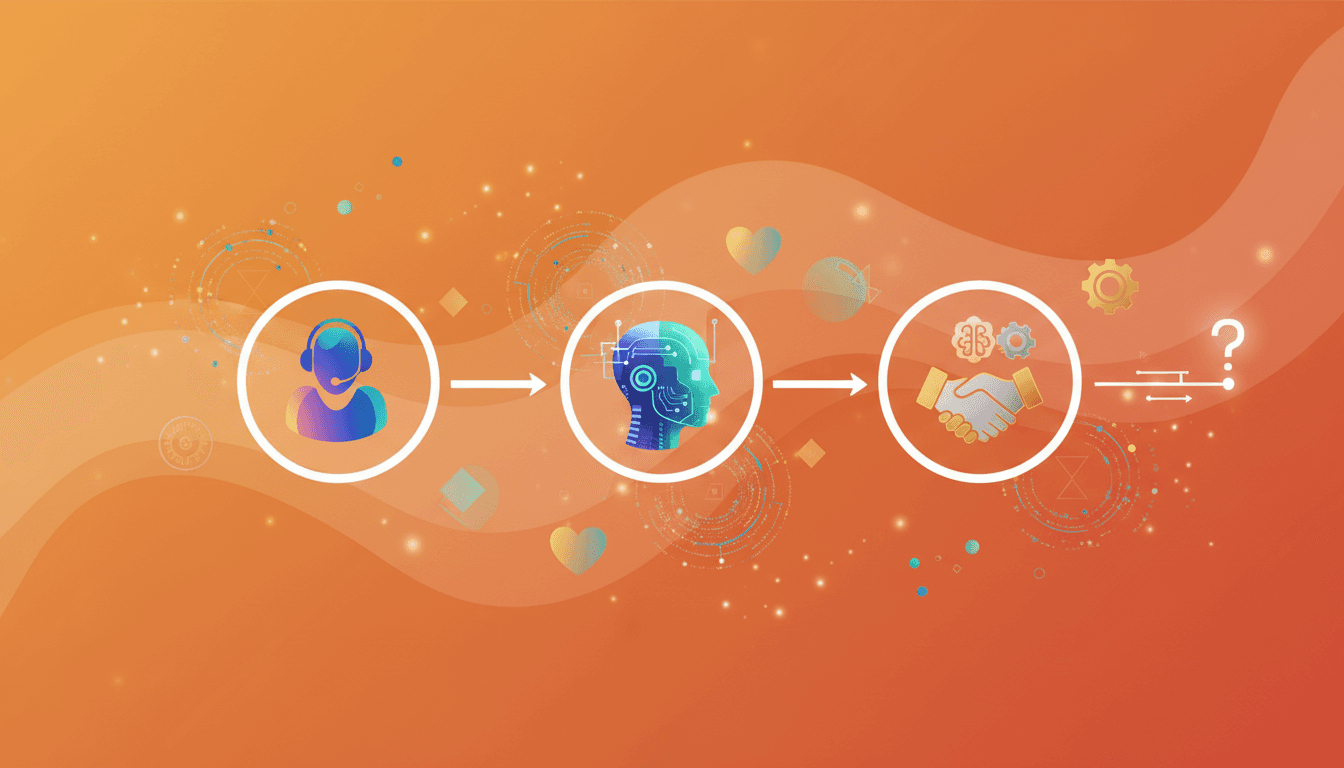
"Will AI replace customer service?" It's the question every business leader asks—and every support agent worries about.
The answer isn't a simple yes or no. The future of customer service isn't AI or humans. It's AI and humans, working together in ways that leverage the strengths of both.
At BuiltABot, we build AI that augments human teams rather than replacing them. This guide shares our perspective on where customer service is heading and how to prepare.
The Current State of Customer Support
Customer service in 2026 sits at an inflection point. AI capabilities have reached the threshold of handling real customer interactions, but most businesses still rely heavily on human teams.
Where We Are Now
- Average wait time: 10-15 minutes for phone, 2-5 minutes for chat
- First contact resolution: 70-75% with humans
- AI adoption: ~40% of businesses use chatbots, but most are basic
- Customer preference: 62% prefer chat over phone for simple queries
- Cost per interaction: $6-12 for human, $0.50-2 for AI
The Pain Points Driving Change
- Labor costs rising while customer expectations increase
- 24/7 coverage demand impossible to staff affordably
- Agent burnout from repetitive, low-value interactions
- Inconsistent quality across different agents and shifts
- Customers expecting instant responses (thanks, Amazon)
What AI Can Do Now (And What's Coming)
AI customer service capabilities have advanced dramatically. Here's an honest assessment of current and near-future abilities:
AI Does Well Now
- FAQ answering: 90%+ accuracy for well-documented topics
- Order status and tracking: Instant, accurate, 24/7
- Appointment scheduling: Seamless calendar integration
- Basic troubleshooting: Step-by-step guidance
- Information collection: Gathering details before human handoff
- Multi-language support: 95+ languages without additional staffing
AI Is Improving Rapidly
- Sentiment detection: Recognizing frustrated customers
- Context retention: Remembering previous conversations
- Process execution: Actually completing tasks (refunds, changes)
- Personalization: Adapting responses to customer history
AI Still Struggles With
- Novel situations not covered in training
- Emotionally charged conversations requiring empathy
- Complex multi-step problems requiring judgment
- Negotiations and exception handling
- Building genuine customer relationships
What Humans Do Better (And Always Will)
Even as AI improves, certain capabilities remain distinctly human:
Empathy and Emotional Intelligence
When a customer is angry, scared, or frustrated, they need to feel heard by another person. AI can detect emotion; humans can genuinely respond to it. This matters most in high-stakes situations: billing disputes, service failures, or emotional purchases.
Creative Problem-Solving
AI follows patterns. Humans invent solutions. When a customer has an unusual situation that doesn't fit standard processes, human agents can think creatively, bend rules appropriately, and find solutions AI would never suggest.
Building Relationships
For B2B, high-value accounts, or relationship-driven businesses, human connection matters. Customers remember the agent who went above and beyond. AI provides consistency; humans provide memorable experiences.
Judgment and Ethics
Some decisions require human judgment: when to make an exception, how to handle a sensitive situation, or whether a request is legitimate. Humans understand nuance and context that AI misses.
Start Your Hybrid Support Journey
BuiltABot handles routine inquiries while seamlessly escalating to your team when human touch is needed.
The Hybrid Model: Best of Both Worlds
The future isn't AI vs humans—it's AI and humans working together. Here's how the hybrid model works:
How Hybrid Support Flows
- AI First Contact: Chatbot greets customer, understands intent
- Instant Resolution: AI handles routine queries (60-80% of volume)
- Smart Escalation: Complex/emotional issues route to humans with full context
- AI-Assisted Human: Agents get suggested responses, customer history, relevant docs
- AI Follow-Up: After resolution, AI sends surveys, documentation, reminders
Why Hybrid Outperforms Pure Approaches
| Metric | Human Only | AI Only | Hybrid |
|---|---|---|---|
| Availability | Business hours | 24/7 | 24/7 + human backup |
| Response Time | 5-15 minutes | Instant | Instant + fast escalation |
| Complex Issue Handling | Excellent | Poor | Excellent (routed to humans) |
| Cost per Contact | $8-12 | $0.50-2 | $2-4 (blended) |
| Customer Satisfaction | 85% | 70% | 90%+ |
Impact on Customer Service Jobs
Let's address the elephant in the room: what happens to customer service jobs?
Jobs That Will Decrease
- Tier 1 support handling routine queries
- After-hours answering services
- Basic data entry and ticket logging
Jobs That Will Increase
- Complex issue specialists
- AI trainers and conversation designers
- Customer experience strategists
- VIP and high-value account managers
- Quality assurance and AI oversight
The Net Effect
Total customer service employment will likely decrease, but remaining roles will be higher-skilled and higher-paid. The shift mirrors what happened in manufacturing: fewer workers doing more valuable work with better tools.
Preparing Your Team for the Future
For Business Leaders
- Start AI implementation now—waiting creates disadvantage
- Invest in agent training for complex problem-solving
- Build seamless handoff systems between AI and humans
- Redefine success metrics beyond handle time
- Communicate transparently with your team about changes
For Customer Service Professionals
- Develop emotional intelligence—AI can't replicate it
- Learn to work with AI tools—they're your new colleagues
- Build expertise in complex issues AI can't handle
- Focus on relationship building with high-value customers
- Consider specialization in AI training or CX strategy
2026-2030 Timeline: What to Expect
2026: The Tipping Point
- 50%+ of businesses using AI-assisted support
- Hybrid models becoming standard for mid-market
- Customer acceptance of AI support normalized
2027-2028: Rapid Scaling
- 70-80% of routine queries handled by AI
- Human agents focusing primarily on escalations
- AI-human collaboration tools maturing
2029-2030: New Equilibrium
- Hybrid model as dominant paradigm
- Human roles fully evolved to high-value work
- AI handling 85%+ of first-contact volume
- Customer expectations reset around instant AI + quality human backup
The Bottom Line
The future of customer service isn't about choosing between AI and humans—it's about combining them intelligently. AI handles volume, consistency, and availability. Humans handle complexity, empathy, and relationships.
Businesses that adopt the hybrid model early will deliver better customer experiences at lower costs while competitors struggle with either understaffed human teams or frustrating AI-only systems.
BuiltABot is built for this hybrid future. Our AI handles routine inquiries instantly while seamlessly escalating to your team when human expertise is needed. Start your free trial and experience how AI and humans work better together.